E-Scooters for Delivery Work: What Riders Need to Know
March 6, 2026
How Scootshop Builds Confidence for Buyers and Sellers
April 1, 2026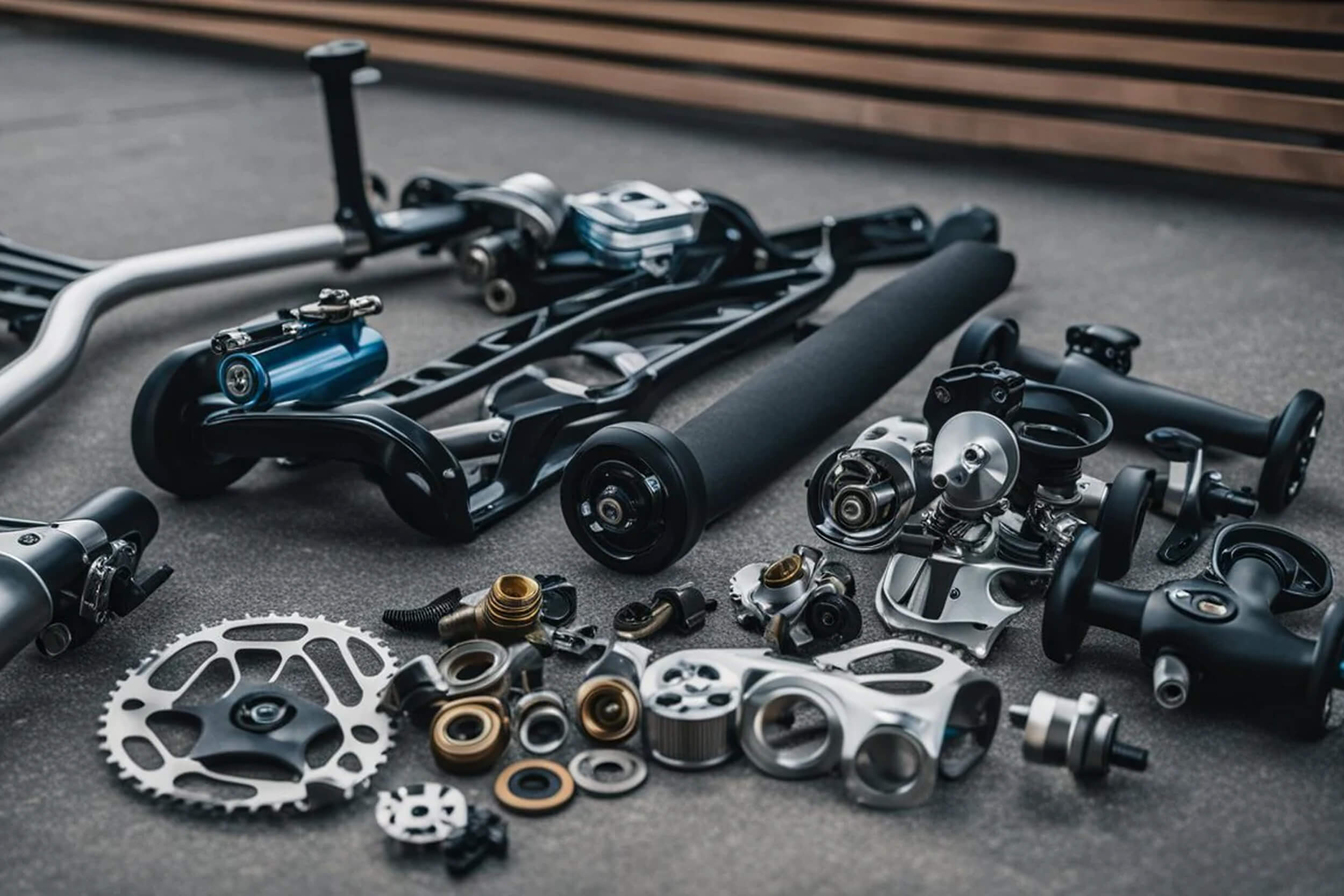
The Environmental Case for Reusing E-Scooter Parts
We often talk about electric scooters as a green alternative to cars—and for good reason. They’re compact, electric, and emit zero exhaust. But beneath the surface of these sleek, quiet machines lies a complex web of parts and materials that don’t just disappear when a scooter reaches the end of its first life.
Batteries, motors, wheels, frames, wiring, brake pads—every part of an e-scooter is a resource. And as the micromobility industry grows, the question becomes not just how to use e-scooters efficiently, but how to reuse what they’re made of.
At Scootshop, we’re committed to sustainability at every stage of the scooter’s life. That means giving new life to old rides, not just through resale but by reusing, rebuilding, and responsibly managing the parts that make them work. In this article, we’ll explore why reusing scooter parts is critical to environmental progress—and how it’s already reshaping the micromobility space.
The Hidden Footprint of E-Scooters
When a new electric scooter rolls off the assembly line, it carries more than just potential—it carries a carbon footprint. Even though it won’t emit CO₂ while you’re riding, its components were manufactured using mined metals, synthetic materials, and a lot of energy.
Battery packs, for example, contain lithium, cobalt, and nickel—elements that are environmentally intensive to extract. Aluminum frames require high-heat processing. Even the rubber in tires has a supply chain attached to it. When you add in shipping, packaging, and the electronics involved, a scooter’s environmental cost is front-loaded long before its first charge.
The good news? All of that embedded value doesn’t vanish when a scooter stops working. Many of its parts can be saved, reused, and recirculated.
When a Scooter “Dies,” Its Parts Don’t
One of the most frustrating myths in micromobility is that when a scooter breaks or stops charging, it’s done for. But in most cases, it’s one or two components—often the battery or a wiring issue—that cause the problem. Meanwhile, the rest of the scooter is still in good shape.
Motors can outlast the scooter itself by years. Frames are rarely damaged beyond repair unless there’s been a major accident. Even tires, lights, kickstands, and brake systems can be salvaged with a bit of care.
The key is having a system in place to recover these parts, inspect them properly, and reallocate them where they’re needed. That’s exactly what we do at Scootshop—working with technicians and rebuilders to assess each returned scooter and make sure every usable part gets a second chance.
Reducing E-Waste at the Source
Electronic waste—or e-waste—is one of the fastest-growing types of waste in the world. And with the rise of micromobility, scooters are increasingly adding to that pile. From spent batteries to discarded chargers and unused dashboards, the waste adds up quickly.
By reusing parts, we can delay or eliminate that waste entirely. A motor from one scooter might find new life in another. A working display from a retired unit can be used to replace a broken one. Brake assemblies, wiring harnesses, folding mechanisms—these aren’t garbage. They’re building blocks.
Reusing parts isn’t just smart; it’s preventative. It keeps waste from being created in the first place.
Conservation of Raw Materials
Beyond waste management, reusing scooter parts also addresses another critical environmental issue: resource depletion.
Mining for the metals and minerals used in scooter production is not only energy-intensive but also associated with pollution, habitat destruction, and often exploitative labor conditions. The more we reuse, the less pressure we place on these supply chains.
Think of each part as a little victory against resource overconsumption. Every reused frame, wheel, or battery cell is one fewer that needs to be produced from scratch. And when these components can be repurposed into functional, ride-ready scooters, the environmental savings multiply across thousands of users.
A Marketplace That Closes the Loop
Scootshop isn’t just a resale platform—it’s part of a broader shift toward circularity. Our work with reused parts is guided by a core belief: that scooters are more than disposable goods. They’re systems of valuable materials and design that deserve to be preserved and repurposed.
When we rebuild a scooter using refurbished parts, we’re not just reducing the cost for the buyer. We’re closing the loop. We’re taking what might’ve ended up as e-waste and giving it new purpose. And in doing so, we’re helping riders contribute to a more thoughtful, resource-conscious mobility movement.
This isn’t only for the benefit of the planet. It’s practical, affordable, and scalable—and it helps ensure that micromobility lives up to its environmental promise.
Conclusion
Reusing e-scooter parts is about more than fixing old machines. It’s about rethinking the lifecycle of the products we rely on, especially the ones that claim to be “green.”
True sustainability isn’t found in shiny marketing or one-time eco gestures. It’s found in systems that work harder, longer, and more efficiently. It’s found in the hands of technicians salvaging parts, the riders who choose refurbished, and the businesses like Scootshop that commit to doing things differently.
So the next time you ride a scooter—whether it’s brand new or built from reused parts—remember: it’s not just about how it moves you forward. It’s about how it helps the world move forward, too.